Champagne Cake Recipe

I still remember the first time I baked a champagne cake—it wasn’t for a grand party or a big holiday, but for a quiet celebration at home that deserved something a little extra. There was an open bottle of champagne left from the night before, just enough to feel too special to waste. Instead of letting it go flat in the fridge, I poured it into a mixing bowl and crossed my fingers.
That cake came out of the oven light, fragrant, and unexpectedly elegant. Not loud or overly sweet, but soft and delicate with a subtle sparkle in flavor that made everyone pause after the first bite. My family kept asking, “What is that taste?” and smiling before I could even answer.
Champagne cake feels like one of those recipes that sounds fancy but doesn’t demand complicated skills. It’s celebratory without being intimidating. You don’t need a wedding or milestone to bake it—you just need a reason to slow down and enjoy the process. If you’ve ever wanted a cake that feels grown-up, graceful, and quietly impressive, this one earns its place on the table.
I’ll walk you through it exactly how I make it at home, with little notes I’ve learned the hard way, so you can bake it with confidence the first time.
Why I Love This Recipe
What makes champagne cake special isn’t just the ingredient—it’s the mood it creates. This cake doesn’t shout for attention. It charms you slowly.
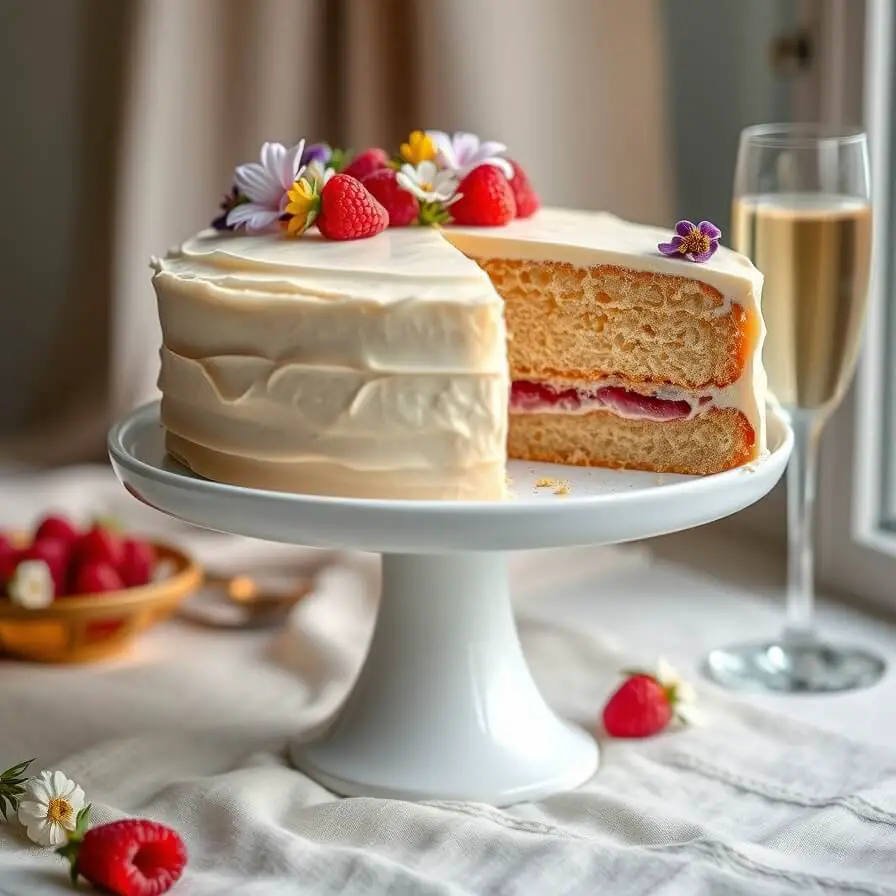
I love this recipe because it balances celebration and comfort in a way few cakes do. The champagne adds a light, airy quality to the crumb while giving a gentle fruity acidity that cuts through the sweetness. You’re not tasting alcohol; you’re tasting sophistication. It feels like something you’d serve at a bridal shower, anniversary dinner, or a quiet birthday where candles flicker a little longer.
Another reason I come back to this recipe is how versatile it is. You can frost it simply or dress it up with berries, edible flowers, or a silky buttercream. It adapts to the occasion without losing its identity. I’ve baked it as a layer cake, a sheet cake, and even cupcakes, and it always holds its structure beautifully.
Most of all, I love how people react to it. Champagne cake surprises people. They expect something strong or boozy, but instead they get something soft, balanced, and elegant. It’s a cake that invites conversation, and those are always my favorite recipes to share.
Ingredients for Champagne Cake
Let’s talk ingredients—not as a dry checklist, but as a group of elements that work together to create that signature texture and flavor.
The star, of course, is champagne. I usually use a dry champagne or prosecco because sweeter sparkling wines can overpower the cake. Flat champagne works just fine, so don’t worry if the bubbles are gone. What matters is the flavor, not the fizz.
All-purpose flour forms the base. I stick with standard flour here because it gives the cake enough structure without becoming dense. Cake flour can work, but it makes the crumb very soft, almost too delicate for layering.
Butter brings richness and flavor. I always use unsalted butter so I can control the salt level. Make sure it’s softened—not melted—so it creams properly with the sugar.
Granulated sugar sweetens the cake while also helping create that light, tender crumb. Champagne already has subtle fruit notes, so I avoid brown sugar here to keep the flavor clean.
Egg whites are important in this recipe. They keep the cake pale and airy. Whole eggs can darken the crumb and make it heavier, which takes away from the elegance of the cake.
Milk adds moisture and balances the champagne. I use whole milk for the best texture, but lower-fat milk will still work.
Baking powder gives the cake lift. Because champagne is acidic, baking powder (not soda) is the better choice to ensure even rising.
Vanilla extract rounds out the flavor. It doesn’t compete with the champagne—it supports it quietly in the background.
A pinch of salt is essential. It sharpens every other flavor and keeps the cake from tasting flat.
Each ingredient has a role here, and when they come together, the result is a cake that feels intentional and refined.
How Much Time Will You Need
Champagne cake is not a rushed recipe, but it’s not an all-day project either.
I usually set aside about 20 minutes for preparation. This includes measuring ingredients, creaming butter and sugar, and gently mixing everything together. Taking your time here makes a difference in the final texture.
The baking time is around 30 to 35 minutes, depending on your oven and pan size. I like to check a few minutes early because overbaking can dry out this delicate cake.
Once baked, the cake needs time to cool completely. This takes about 45 minutes to an hour. If you plan to frost it, patience is key. Frosting a warm cake is a shortcut to disappointment.
In total, you’re looking at roughly 1 hour and 30 minutes from start to finish, not including decorating. It’s very manageable and well worth the time.
How to Make This Champagne Cake
This is where everything comes together. Read through the steps once before you start—it helps the process feel calm and enjoyable.
Step – 1: Prepare your pans and oven
Preheat your oven to 350°F (175°C). Grease your cake pans and line the bottoms with parchment paper. This cake is soft, so proper pan prep makes removing it stress-free.
Step – 2: Mix the dry ingredients
In a bowl, whisk together the flour, baking powder, and salt. This ensures even distribution and prevents pockets of leavening later.
Step – 3: Cream butter and sugar
In a large mixing bowl, beat the softened butter and sugar until light and fluffy. This usually takes about 3 to 4 minutes. Don’t rush this step—it builds the cake’s structure.
Step – 4: Add egg whites and vanilla
Add the egg whites one at a time, mixing well after each addition. Stir in the vanilla extract. The batter should look smooth and slightly glossy.
Step – 5: Alternate liquids and dry ingredients
Add the dry ingredients in three parts, alternating with the champagne and milk. Start and end with the dry ingredients. Mix gently and stop as soon as everything is combined. Overmixing can make the cake tough.
Step – 6: Bake with care
Divide the batter evenly between pans and smooth the tops. Bake until a toothpick inserted in the center comes out clean or with a few moist crumbs.
Step – 7: Cool completely
Let the cakes cool in the pans for 10 minutes, then turn them out onto a wire rack to cool fully. This step is essential before frosting or slicing.
Substitutions
Sometimes you want to bake, but you don’t have everything on hand. This recipe is flexible if you know where you can adjust.
If you don’t have champagne, prosecco or cava works beautifully. Even a sparkling white grape juice can be used for a non-alcoholic version, though the flavor will be sweeter and softer.
Butter can be replaced with a high-quality plant-based butter if needed. Choose one designed for baking to maintain texture.
Milk can be swapped with almond or oat milk. I recommend unsweetened versions so the cake doesn’t become overly sweet.
If you need a lighter crumb, you can replace a small portion of the flour with cornstarch. This mimics cake flour and makes the texture more delicate.
Each substitution changes the cake slightly, but none of them take away from its charm when done thoughtfully.
Best Side Dish of Champagne Cake
Champagne cake pairs beautifully with simple, elegant sides that don’t overpower it.
Fresh berries, especially strawberries or raspberries, add brightness and contrast the soft crumb.
A light vanilla whipped cream complements the cake without masking the champagne flavor.
A fruit compote, such as raspberry or peach, adds warmth and depth, making the dessert feel restaurant-worthy.
When served together, these sides turn a simple slice into a complete experience.
Serving and Presentation Tips
This is the part where champagne cake really gets to shine.
I’ve learned that how you serve this cake matters almost as much as how you bake it. Because the flavor is soft and elegant, the presentation should feel the same way—clean, intentional, and not overly busy.
I usually serve champagne cake slightly chilled or at cool room temperature. When it’s too warm, the crumb can feel fragile; when it’s too cold, the flavors stay muted. Letting it sit out for about 15 minutes before slicing brings everything into balance.
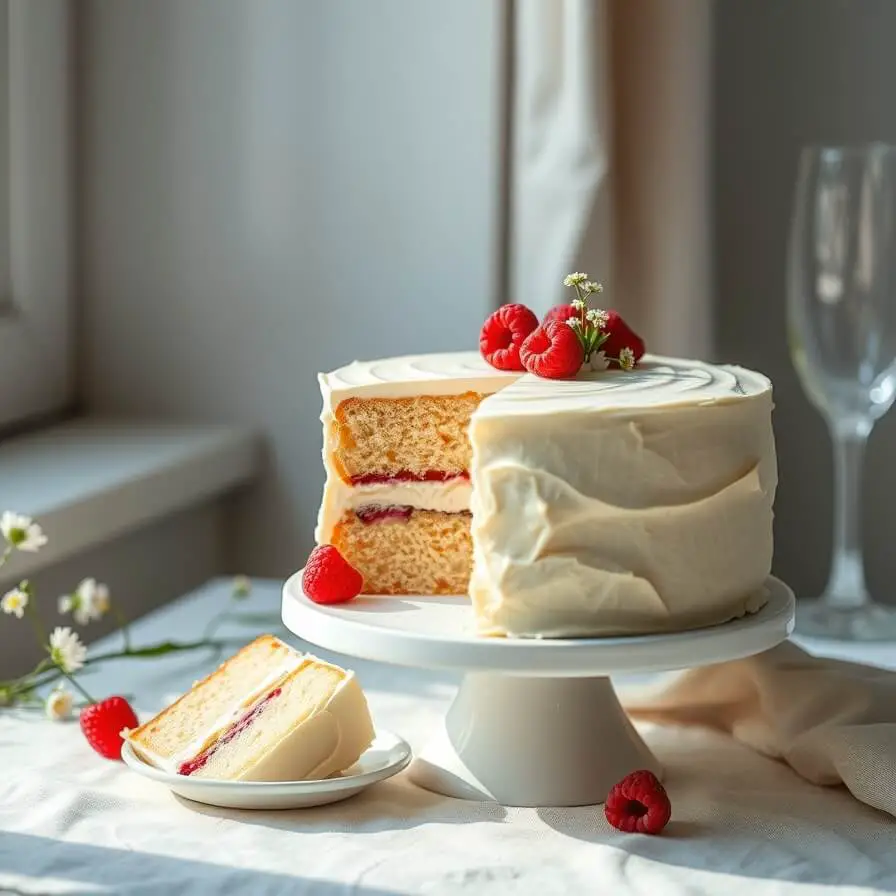
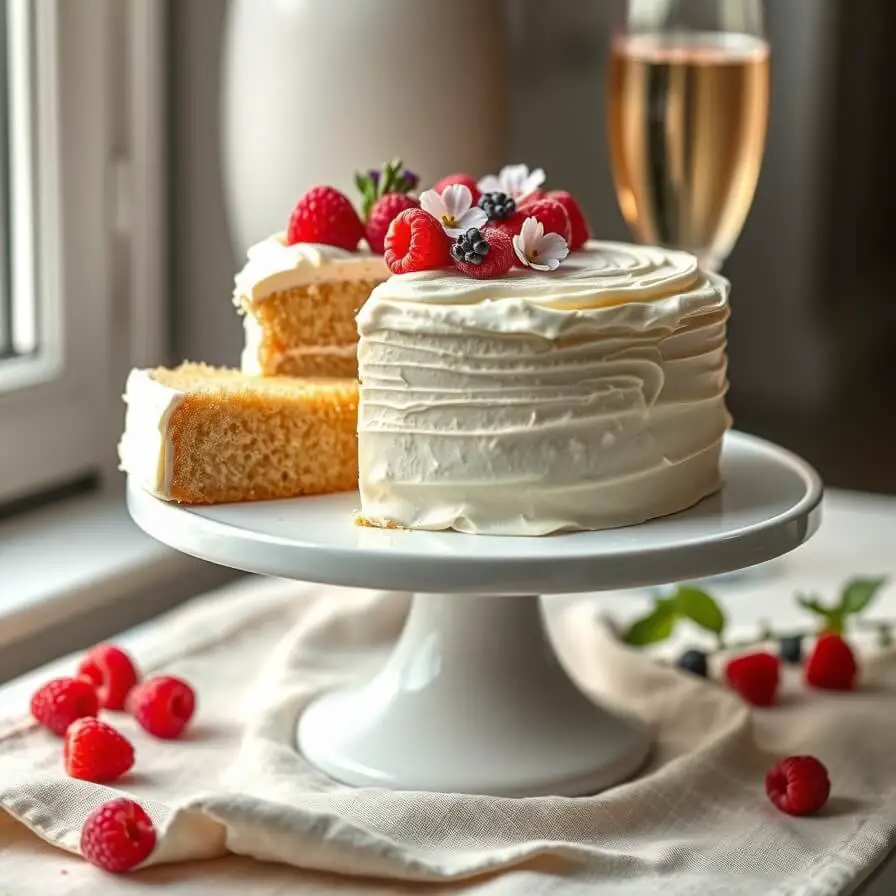
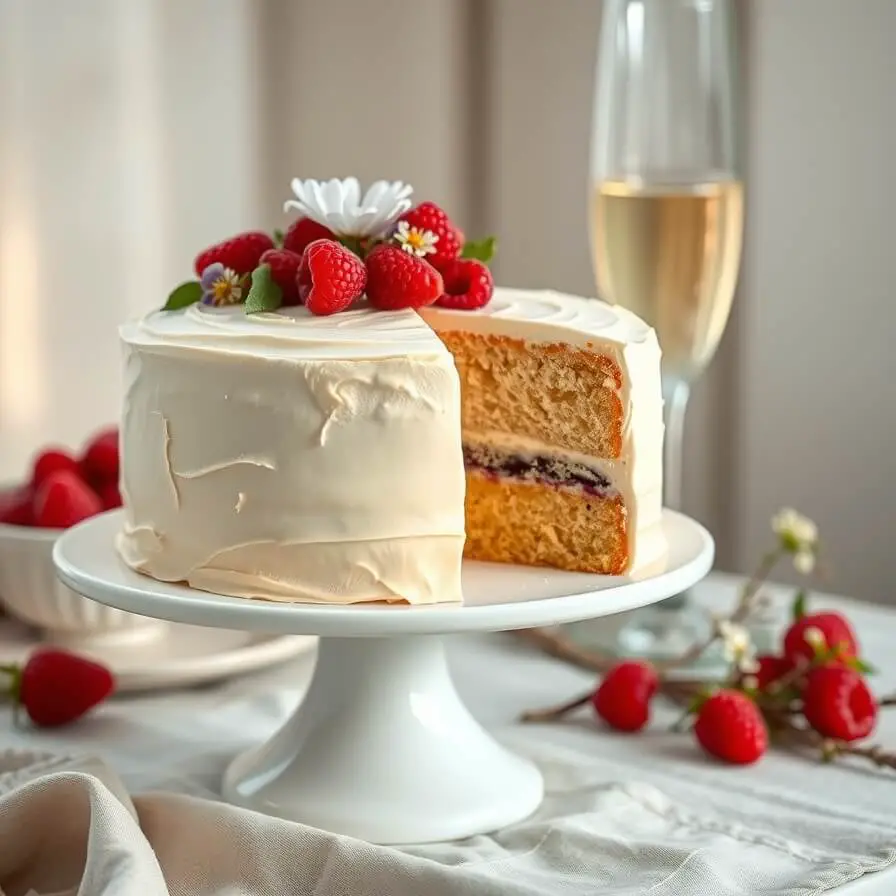
For presentation, I love keeping things minimal. A smooth layer of buttercream with soft swoops feels timeless. If I’m feeling a bit more festive, I’ll add fresh berries on top or around the base of the cake. Their natural color pops beautifully against the pale crumb.
Another favorite of mine is a light dusting of powdered sugar right before serving. It catches the light and gives the cake a quiet, celebratory look without overpowering it.
If you’re serving this for a special occasion, thin slices work best. Champagne cake is rich in texture but gentle in flavor, so smaller portions feel satisfying rather than heavy. It’s the kind of cake people remember not because it was dramatic, but because it felt thoughtful.
Tips and Tricks to Make This Recipe Even Better
Over the years, I’ve picked up a few small tricks that make a big difference with champagne cake.
One of the most important things is temperature. Room-temperature ingredients aren’t just a suggestion here—they’re essential. Cold butter won’t cream properly, and cold milk can cause the batter to curdle slightly. I usually take everything out of the fridge about an hour before baking.
Another tip is to choose your champagne carefully. A dry champagne or prosecco gives the cleanest flavor. If the wine tastes good in a glass, it will taste good in the cake. If it’s overly sweet or harsh, that flavor will carry through.
Mixing gently is also key. Once the flour goes in, I slow everything down. Overmixing develops gluten, and this cake is all about softness. I stop mixing as soon as the batter looks smooth and unified.
If you want to enhance the flavor without overpowering it, a small splash of almond extract alongside the vanilla works beautifully. It adds depth without stealing the spotlight.
Lastly, let the cake cool completely before decorating. I know it’s tempting to rush, but champagne cake rewards patience. The crumb settles as it cools, making it easier to frost and slice cleanly.
Common Mistakes to Avoid
Even simple recipes can go wrong if you’re not careful, and champagne cake has a few common pitfalls.
One mistake I see often is using sweet sparkling wine. It sounds harmless, but it can make the cake cloying. The subtle elegance disappears, and the balance is lost.
Another issue is overbaking. This cake doesn’t brown deeply, so people sometimes leave it in the oven too long waiting for color. Instead, rely on texture. A toothpick with a few moist crumbs is exactly what you want.
Skipping pan preparation is another problem. Because the crumb is delicate, the cake can stick easily. Lining the pans with parchment paper makes removal effortless and prevents heartbreak.
Rushing the cooling process can also cause trouble. Frosting a warm cake leads to melting frosting and crumbling layers. Letting the cake cool fully keeps everything neat and professional-looking.
Avoid these mistakes, and the recipe becomes surprisingly forgiving.
How to Store It
Champagne cake stores better than most people expect, as long as it’s handled properly.
If unfrosted, the cake layers can be wrapped tightly in plastic wrap and stored at room temperature for up to one day. For longer storage, I refrigerate them for up to three days or freeze them for up to two months.
Once frosted, the cake should be kept in the refrigerator, especially if the frosting contains dairy. I like to store it in a cake container to protect it from absorbing fridge odors.
Before serving leftovers, let the cake sit at room temperature for about 20 minutes. This softens the crumb and brings the flavors back to life.
If you’re planning ahead, champagne cake actually freezes very well. Wrap slices individually, and you’ll have elegant dessert ready whenever you need it.
FAQ
Can I make champagne cake ahead of time?
Yes, and I often do. You can bake the layers a day in advance and frost them the next day. The flavor actually improves slightly as it rests.
Does the alcohol bake out completely?
Most of it does. What remains is the flavor, not the alcohol itself. The cake tastes refined, not boozy.
Can I turn this recipe into cupcakes?
Absolutely. Reduce the baking time and check for doneness early. The texture works beautifully in cupcake form.
What frosting pairs best with champagne cake?
A light vanilla buttercream, whipped cream frosting, or even a champagne-infused frosting all work well. Keep it simple so the cake stays the star.
Can I use this cake for weddings or events?
Yes, and it’s a wonderful choice. It holds its shape, slices cleanly, and feels celebratory without being heavy.
Champagne Cake Recipe
- Total Time: 1 hour 30 minutes
- Yield: 10 1x
- Diet: Vegetarian
Description
This champagne cake is soft, airy, and quietly elegant—perfect for celebrations both big and small. Made with real champagne, this cake has a delicate crumb and a refined flavor that feels special without being overwhelming. It’s the kind of dessert that doesn’t rely on excess sweetness or decoration to impress. Instead, it wins people over with balance, texture, and subtle sophistication. Whether you serve it for an anniversary, bridal shower, or a cozy celebration at home, this cake feels intentional and memorable. It’s simple enough for confident home bakers yet refined enough to feel bakery-worthy, making it a recipe you’ll come back to whenever the moment calls for something truly lovely.
Ingredients
- All-purpose flour
- Baking powder
- Salt
- Unsalted butter, softened
- Granulated sugar
- Egg whites
- Whole milk
- Champagne or prosecco
- Vanilla extract
Instructions
- Preheat the oven and prepare cake pans with parchment paper.
- Whisk together flour, baking powder, and salt in a bowl.
- Cream butter and sugar until light and fluffy.
- Add egg whites one at a time, then vanilla.
- Alternate adding dry ingredients with champagne and milk, mixing gently.
- Pour batter into pans and bake until just done.
- Cool completely before frosting or serving.
Notes
- Use a dry champagne for best flavor. Avoid overmixing the batter to keep the crumb soft and tender. Let the cake cool fully before decorating for the cleanest results.
- Prep Time: 20 minutes
- Cook Time: 35 minutes
- Category: Dessert
- Method: Baking
- Cuisine: American
Nutrition
- Serving Size: 10
- Calories: 320
- Sugar: 24g
- Sodium: 180mg
- Fat: 14g
- Saturated Fat: 8g
- Unsaturated Fat: 5g
- Trans Fat: 0g
- Carbohydrates: 42g
- Fiber: 1g
- Protein: 4g
- Cholesterol: 45mg